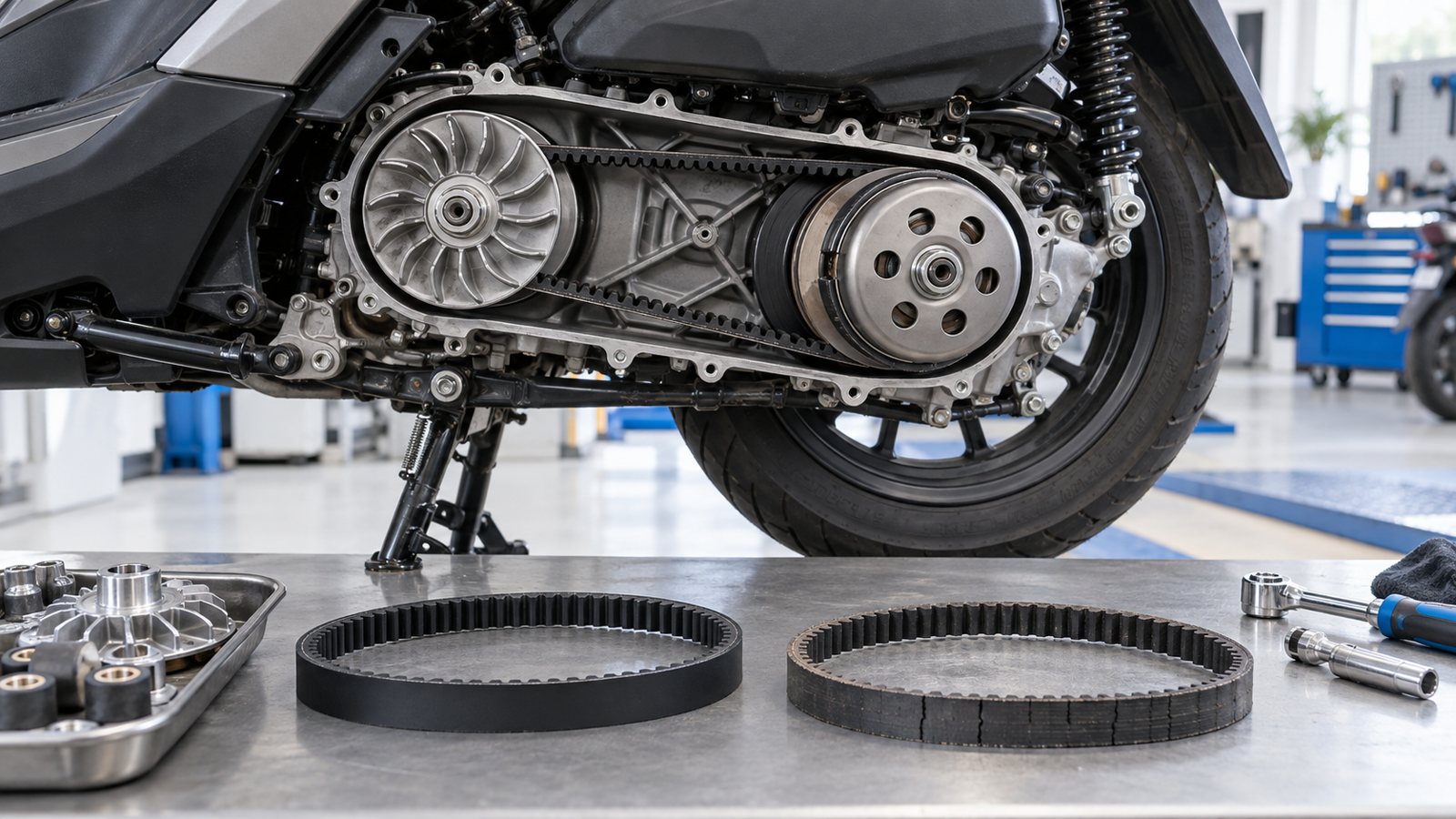
Scooter CVT Belt Noise, Cracks and Slippage: 5 Inspection Points
A scooter CVT drive belt is an important wear component, but abnormal acceleration or transmission noise is not always caused by the belt alone. The variator, clutch, bearings, dust inside the transmission case or other components may also be involved. Follow the vehicle manufacturer’s service schedule and inspection method instead of judging by mileage or appearance alone.
1. Engine speed rises but road speed does not increase as expected
If engine RPM increases noticeably without a matching increase in vehicle speed, belt slippage, belt wear or another CVT component may require inspection. A qualified technician should check belt width and surface condition together with the variator and clutch.
2. New noise or vibration from the transmission case
Unusual rubbing, knocking or vibration during takeoff, acceleration or deceleration should be investigated. The source may be the belt, rollers, sliders, clutch or bearings, so the complete CVT system should be inspected.
3. Cracks, missing cogs, exposed cords or a glazed surface
Cracks between the cogs, frayed edge cords, missing rubber or a shiny heat-affected surface can indicate excessive heat, slippage, improper installation or another drivetrain issue. Do not back-bend, twist or pry a CVT belt during handling because its internal tensile cords may be damaged.
4. Unusual dust, burning odor or signs of overheating
Some belt dust may develop in normal service, but a sudden increase in dust, a burning smell or clear heat damage calls for inspection of ventilation, cleanliness, the belt and pulley surfaces. If there is sudden loss of drive, severe vibration or sharp noise, stop in a safe location and arrange professional service.
5. Use the service manual and actual inspection results
Inspection and replacement intervals vary by model, engine size, riding conditions and load. Follow the manufacturer’s manual, service indicator and measurements by a qualified technician. A single mileage rule should not be applied to every scooter.
Before sourcing a scooter CVT belt, prepare:
1. Vehicle make, model, year and engine displacement.
2. OE part number or all markings on the existing belt.
3. Belt dimensions, tooth profile or clear photos when available.
4. Riding environment, load and service requirements.
SHIN-HO provides supply and sourcing support for motorcycle transmission belts. Repair channels, parts distributors and overseas buyers may send the information above so we can help review an appropriate supply direction. This article provides general inspection information; actual service and replacement procedures must follow the vehicle manufacturer’s manual and a qualified technician’s assessment.
Contact SHIN-HO: https://www.shin-ho-belt.com/contactus?lang=en